
 Image 1 of 5
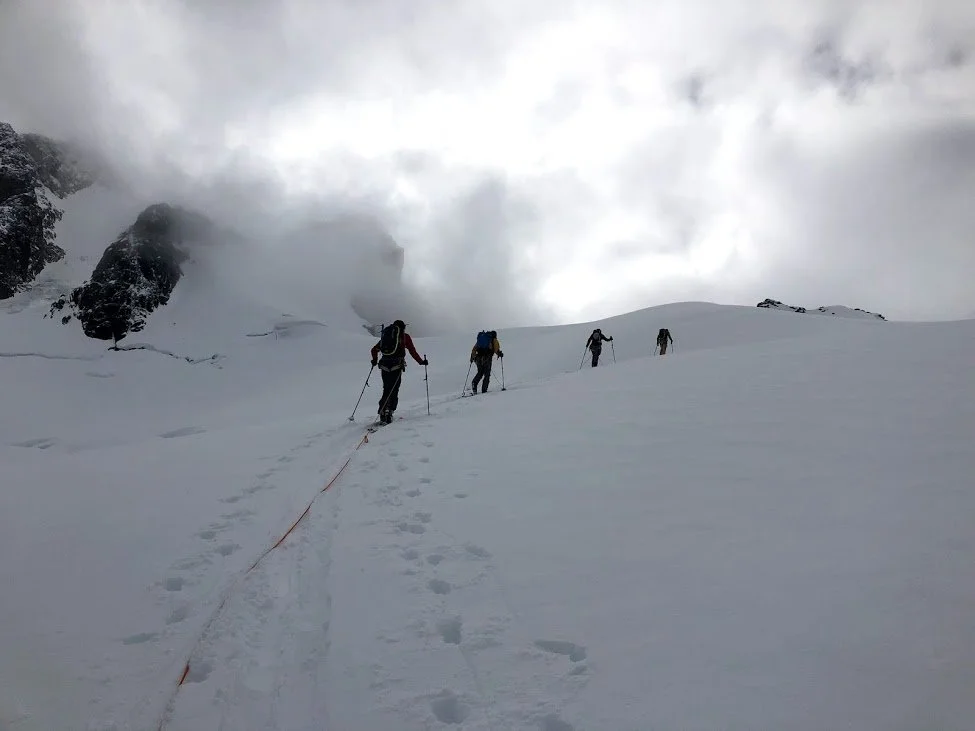 Image 2 of 5
 Image 3 of 5
 Image 4 of 5
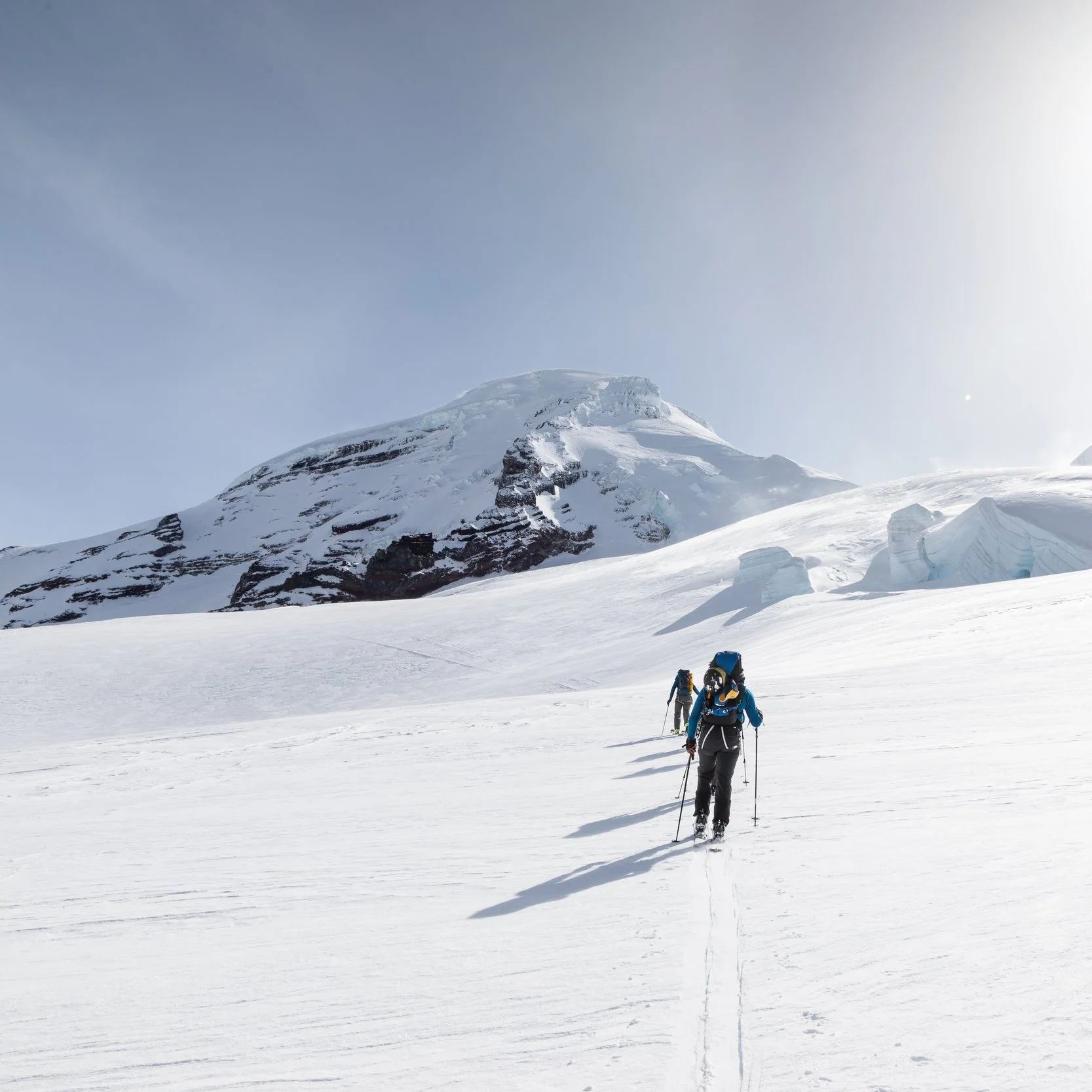 Image 5 of 5
Learning Outcomes:
Risk Management – We’ll build on concepts from your avalanche courses and add nuance for traveling without a daily forecast and moving through larger, more complex terrain.
Gear – What equipment is needed for extended travel in big mountain environments.
Snow Anchors – Uses, materials, and relative strengths.
Rope Work – When and how to rope up on a glacier, an introduction to crevasse rescue, added security in steep terrain, rappelling, and rope ascents.
Camp Craft – With three nights in the field, we’ll spend time living in the snow and learning how to stay warm and dry. We’ll also cover considerations for moving camp each day versus base camping, including sanitation and Leave No Trace (LNT).
Glacier Travel – We’ll spend significant time studying glaciers: how they move, where crevasses are likely to form, and how to travel across them safely.
Navigation – Compass use, tour planning, time calculations, paper map work, and GPS.
Crampon and Ice Axe Use – When to take your skis off and how to move safely and efficiently on firm snow and ice.
Self-Rescue – Improvised snow shelters, rescue sleds, and considerations for evacuation.
Itinerary:
Optional Seattle Prep Session – Join an optional 2-hour session in Seattle to learn the components of crevasse rescue before the course begins. Friends are welcome with a signed waiver. If you don’t have time to meet in Seattle, I’ll send pre-course materials for you to review.
Day 1 – We’ll meet at the trailhead at 8 a.m. and climb up to 4,000 ft with our overnight packs before setting up camp.
Days 2–3 – We’ll spend the days away from camp (approximately 8 a.m. to 4 p.m.) practicing and learning new skills. Expect 3,000–5,000 ft of climbing and skiing each day.
Day 4 – We’ll put everything together by climbing and skiing an objective of choice. We’ll pack up camp on the descent and aim to be back at the cars by 4 p.m.
*This is a sample itinerary and may change due to weather, conditions, and participant skill levels.*
Difficulty:
This course involves a moderate level of physical exertion and technical difficulty. You will carry an overnight pack to camp and ski with slightly more gear than you would on a typical backcountry tour. Participants should be familiar with their equipment and able to ski advanced terrain confidently in all conditions while wearing a pack.
Forms:
Within 7 days of purchasing or at least 2 days prior to the commencement of a course, please complete the following forms:
Registration - Follow the link and fill out the associated form.
Assumption of Risk - Download the fillable PDF. You can sign it digitally and email back to info@mountain-craft-guiding.com
Release of Liability - Download the fillable PDF. You can sign it digitally and email back to info@mountain-craft-guiding.com
Terms and Conditions - Please read and familiarize yourself with this document.